Articulated objects
Articulated objects from 3D scans
An articulated object has rigid parts that move on joints. SceneAgent finds those parts in a capture and gives each moving part a joint with limits.
What an articulated object is
An articulated object is made of rigid parts connected by joints. A drawer slides on a prismatic joint. A door turns on a revolute joint. Each joint has an axis and limits.
Many robot tasks start by opening something. A scan shows the object as it was captured. It does not show where the hinge is or how far the door opens.
SceneAgent adds the joints as one pass of its scene conversion. The pass runs after the objects have been split into parts.
From a capture to moving parts
Five converted captures show the steps, from a clamp on a bench to a skeleton.
- 01
Find the parts
SceneAgent decomposes each object into parts as needed. Parts are the rigid pieces of an object.
The lab bar clamp became five parts. They are the bar, the fixed jaw, the sliding jaw, the screw handle and the swivel pad.
- 02
Set joint type, axis and limits
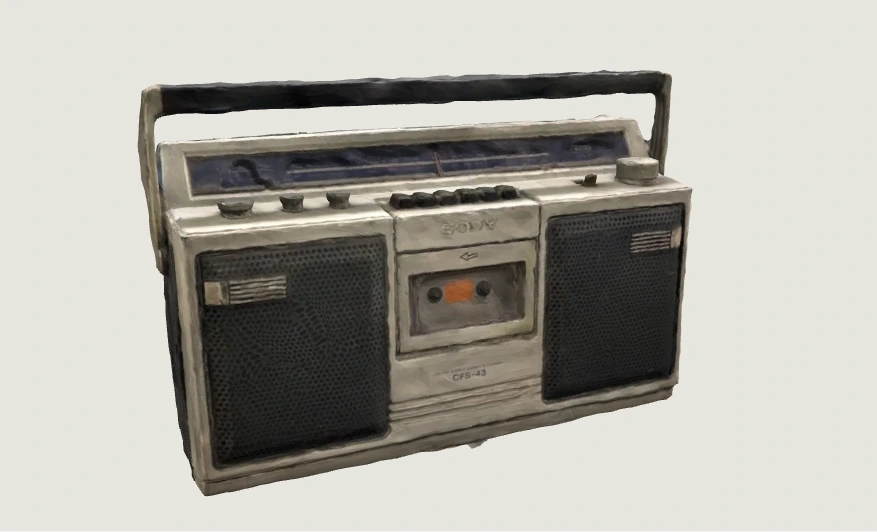
The articulation pass adds a joint to each part that moves. The Sony CFS-43 in the gallery shows a finished articulated package. Its cassette door is a hinge from 0 to 55 degrees with a torsion spring and a latch.
The six tape keys return on springs after 3 mm of travel. Four rotary knobs turn for volume, balance, tone and tuning. The radio has 14 links and 13 joints in all.
- 03
Articulate a whole room
The same pass works across a room. The prompt for one iPhone kitchen asked for every door, drawer and appliance to be articulated.
In the result, a Dexmate opens the dishwasher, two drawers and two wall cabinets by their handles.
- 04
Wheels, cranks and pedals
A bicycle from the Mip-NeRF 360 photographs became seven articulated nodes. They are the frame, the fork, both wheels, the crankset and both pedals.
In the scene, a Unitree G1 rolls the bicycle clear of a park bench and rides a lap around it.
- 05
Skeletons as well as furniture
The stegosaurus skeleton from the American Museum of Natural History was grouped into 11 regions, such as the skull, the tail and the dorsal plates. A region can hold many bones.
In the gallery film, the articulated skeleton walks.
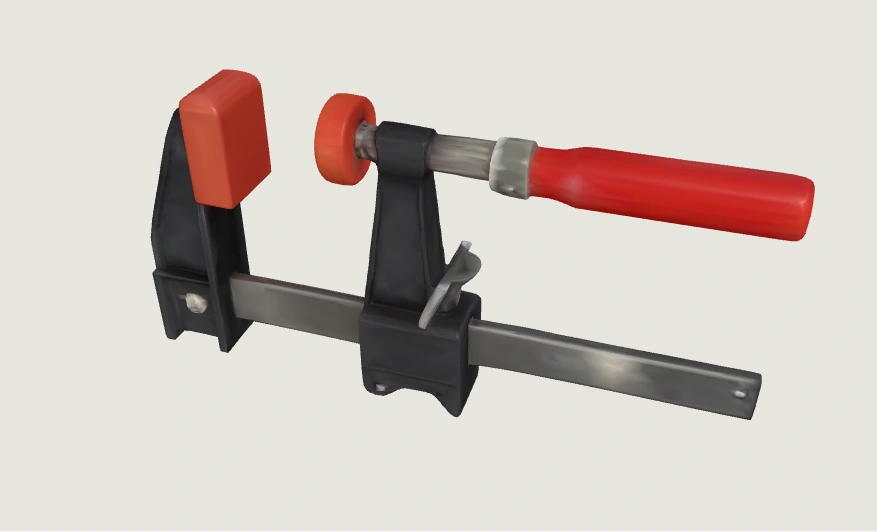
Object 1244 from the lab capture, in five parts.
USD output
SceneAgent packages articulated objects inside the USDZ scene, for Isaac Lab, MuJoCo, Unreal Engine and other simulators. Isaac Lab reads USD articulations directly.
Check the joints before you use the scene. Over MCP, your agent can inspect the scene's object poses, collision meshes and USD articulation. If a joint is missing while a job runs, the agent can send that correction to the job.
Robots from URDF, objects from captures
Robot models usually come as URDF. The Dexmate Vega 1 in our scenes comes from Dexmate's URDF. The Sharpa Wave hands come from Sharpa's URDF, USD and XML models.
Isaac Lab includes a converter from URDF to USD. MuJoCo can also load URDF. The robot and the converted scene then meet in the same simulator.
SceneAgent works on the objects and the room. It starts from a capture, not from a robot description.
Joints in our records and in the job posts
- 13joints across 14 links in the Sony CFS-43 radiosony-cfs-43.json ↗
- 55°upper limit of the radio's cassette door hingesony-cfs-43.json ↗
- 5parts in the lab bar clamp, from the bar to the swivel padbar-clamp.json ↗
- 5 of 25simulation job posts read on 26 November 2026 name USD or OpenUSD. Amazon Robotics asks for robot-model pipelines in URDF, SDF and USD.Amazon Robotics job post ↗
Questions
What is an articulated object?
An articulated object is made of rigid parts that move relative to each other on joints. Drawers, doors and laptop lids are common examples. In simulation, each joint needs a type, an axis and limits.
Can SceneAgent find joints in a scan?
Yes. The articulation pass adds joints to the parts that move. You can ask for it in the prompt, as in “every door, drawer and appliance articulated”. Check the joints before you use the scene.
Which joint types appear in the examples?
The examples on this site include hinges, sliders, rotary knobs, spring-return keys and wheels.
Can it articulate a whole kitchen?
Yes. In the iPhone kitchen from CollectData's Tidy Up dataset, a Dexmate opens the dishwasher, two drawers and two wall cabinets in the converted scene.
Which simulators can load the articulated objects?
SceneAgent packages them as USDZ for Isaac Lab, MuJoCo, Unreal Engine and other simulators. The Sony radio's controls were recorded moving in MuJoCo.